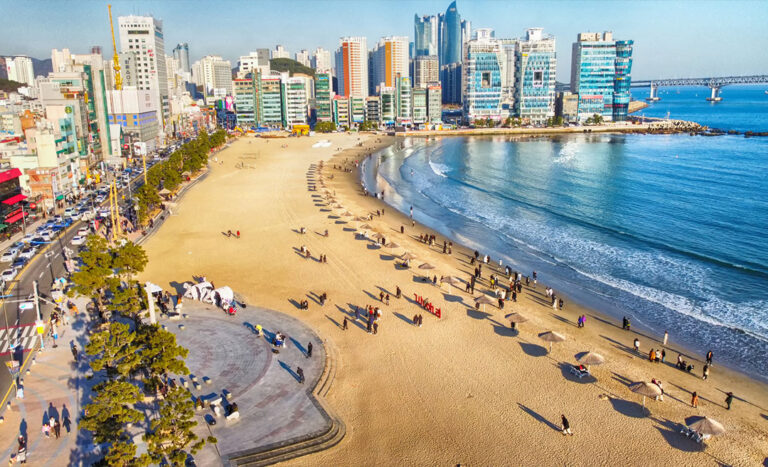
The serene, wide expanse of Gwangalli Beach in winter—a quiet reminder of Busan’s restorative coastal charm. (Image by PhotoSeagull)
Busan, a seaside city in southern South Korea, holds many happy memories for me. I cherish the time I’ve spent there doing activities I love, like surfing along the coastline and enjoying freshly baked treats in beachside cafes.
Compared to its buzzier, more popular sister city — the capital of Seoul — Busan feels softer around the edges, with its calmer, more restorative coastal vibe.
For travellers looking to slow down during their South Korean adventure, Busan is an easy choice. Here are some of my favourite places to visit to slow down, reflect, and reset.
Find Your Flow at Songjeong Beach
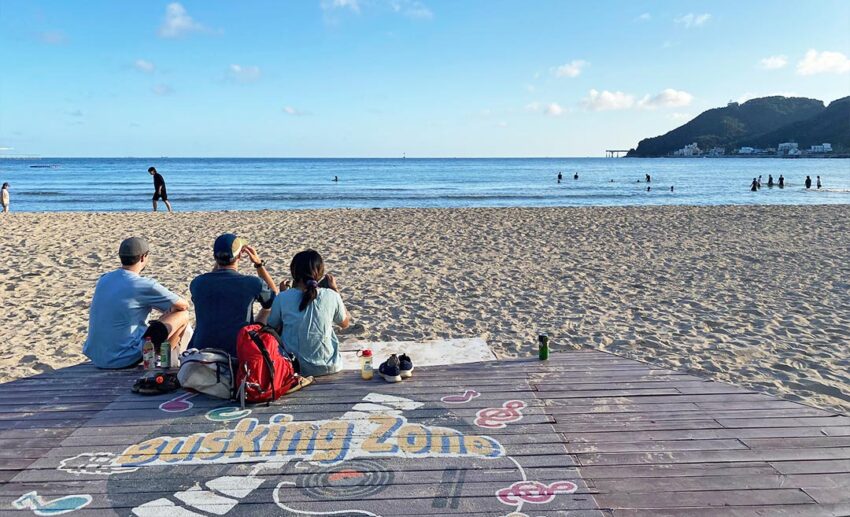
One of my favourite ways to slow down is simply watching the water from the wooden decks at Songjeong. (Image by Ceri Adams) 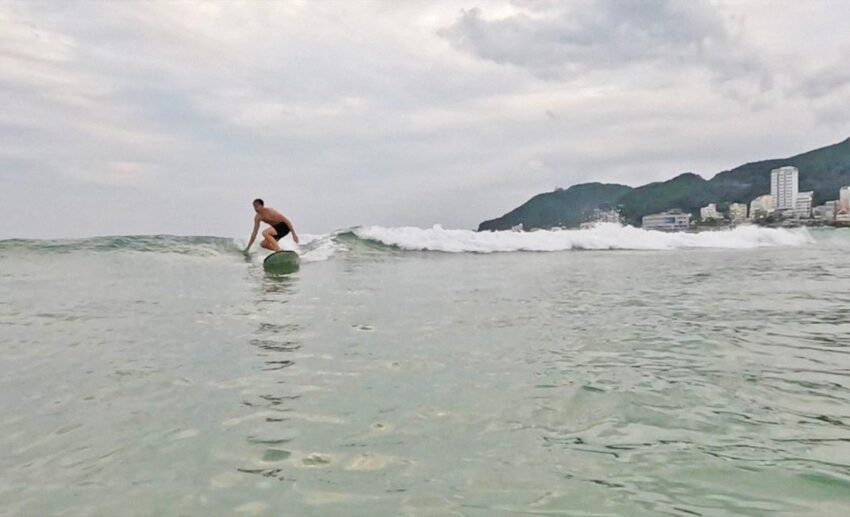
There is a unique kind of peace to be found in catching waves along the Songjeong coastline. (Image by Sofia Shamsunahar)
I can’t help but feel a surge of joy when I think of Songjeong Beach. After cycling for a week from Seoul to Busan, arriving at Songjeong Beach felt like the ultimate celebratory finish.
This white-sand beach stretches for 1.2km and is fringed with cafes, seafood restaurants, and surf rental shops. For those craving more adventure, you can take the scenic coastal train to the popular Haeundae Beach, which is brimming with street performers, food spots, and energy.
Being an amateur surfer, Songjeong is a wonderful spot to catch some waves. I usually like to rent a wetsuit (it’s chilly for me!) and longboard for 2 hours from Surf Holic, where I can get everything for a reasonable KRW30,000 (about RM80).
Surf Holic
50 Songjeonghaebyeon-ro, Haeundae-gu | +82 51-701-4851
Open Saturday – Thursday, 8AM – 8PM
Savour the Moment at Ordinary Recipe Cafe
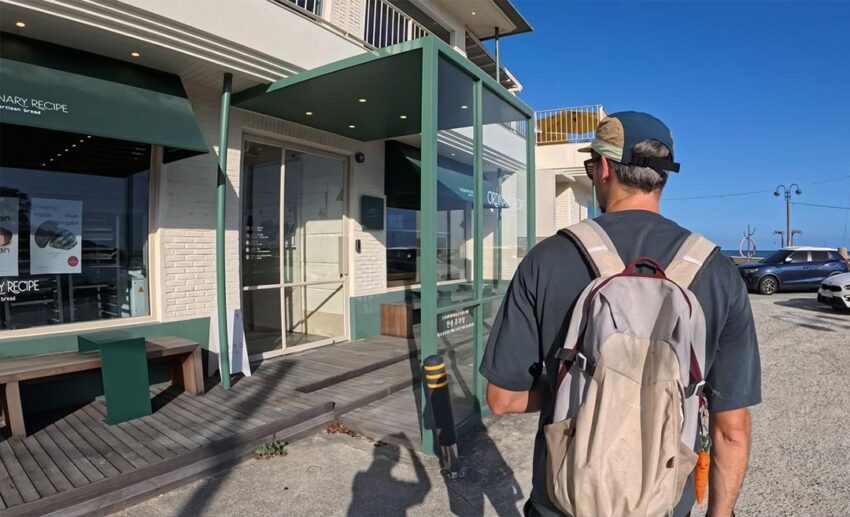
Catching a glimpse of the quiet, sunlit interiors of Ordinary Recipe Cafe before heading inside. (Image by Sofia Shamsunahar) 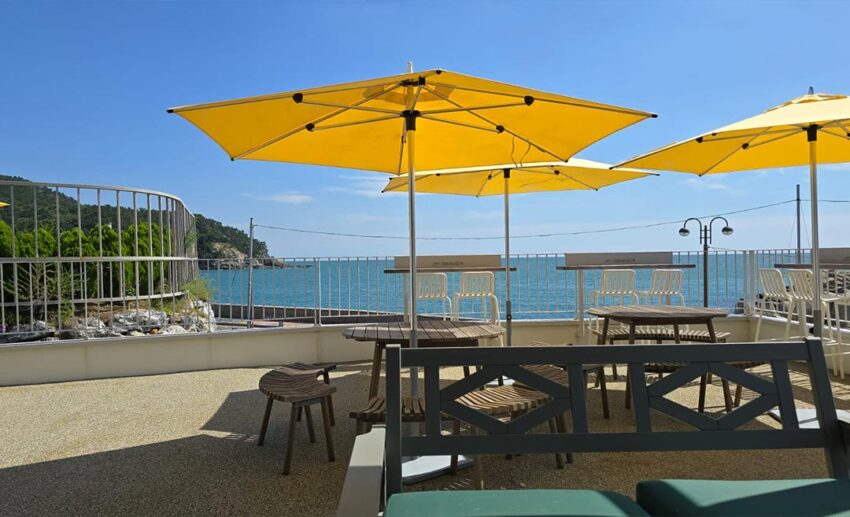
My go-to spot: sprawling out on the patio under the bright yellow umbrellas for a sleepy Busan afternoon. (Image by Bernadette Adams) 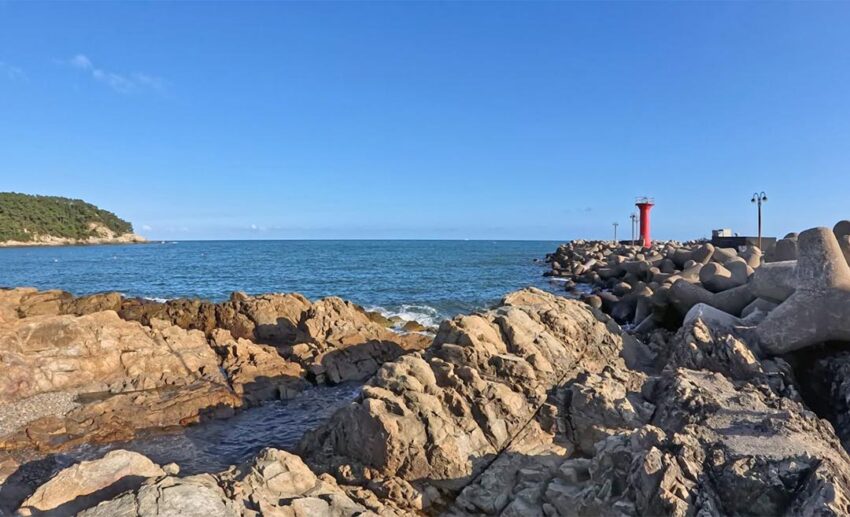
The scenic walk from the beach to the cafe takes me past a charming, pastel-painted fishing harbour. (Image by Sofia Shamsunahar)
Ordinary Recipe Cafe is hands down the best cafe I have been to in Busan. On every visit to the city, I take a scenic walk from Songjeong Beach, passing a pastel-painted fishing harbour before arriving at the eatery.
I love spending my sleepy Busan days sprawled out on a cafe chair, either on the rooftop patio or in the sunlit, floor-to-ceiling window interiors, eating freshly baked bread dipped in olive oil and sipping lattes.
It’s no surprise the baked goods taste so high-quality, as you’ll spot bags of flour from France and other European baking ingredients displayed around the cafe.
Ordinary Recipe Cafe
29 Gongsuhaean-gil, Gijang-eup, Gijang-gun
Open Friday – Wednesday, 9AM – 6 PM
Reflect at Haedong Yonggungsa Temple
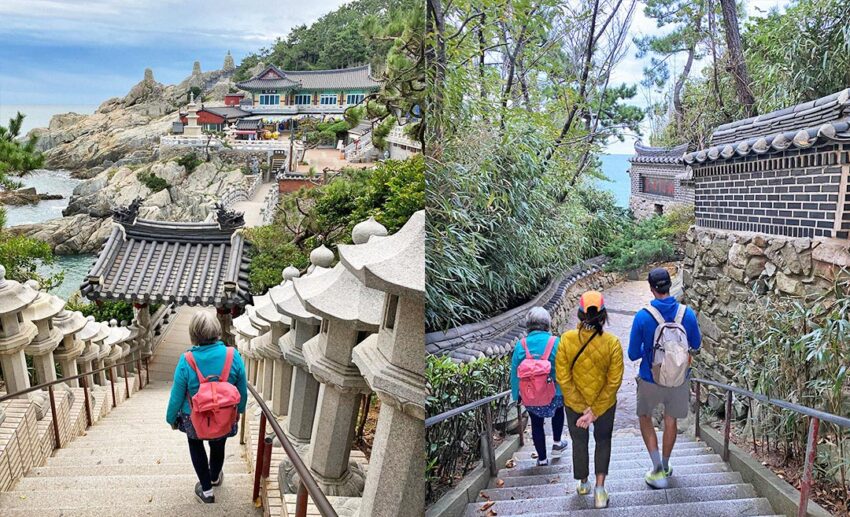
Every step toward Haedong Yonggungsa reveals a beautiful meeting of nature and spirituality along the rocks. (Image by Ceri Adams) 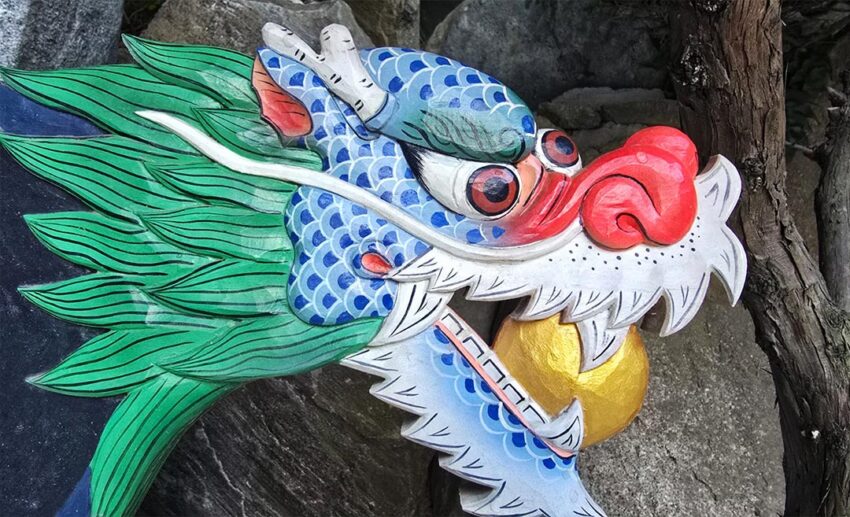
Intricate details and lore hidden within the temple grounds—I always find something new to notice here. (Bernadette Adams)
I always feel a sense of calm when visiting Haedong Yonggungsa Temple, a coastal Buddhist temple a short bus ride from Songjeong Beach.
Originally built in 1376 during the Goryeo Dynasty by the Buddhist teacher Naong Hyegeun, the temple has been rebuilt several times after damage from war and weather. Today, it remains one of the city’s most beloved spiritual landmarks, known for its rare seaside setting.
Walking along the temple steps and bridge, I’m struck by the waves crashing against the shoreline rocks, a beautiful meeting of nature and spirituality.
If you’re hoping for a quieter temple visit, I suggest going at sunrise. As the day goes on, the temple gets packed with tourists arriving on tour buses. Thankfully, the temple opens at 4AM and closes at 8PM.
Haedong Yonggungsa Temple
86 Yonggung-gil, Gijang-gun | +82 51-722-7744
Open Everyday, 4AM – 8PM
Unwind in a Traditional Bathhouse
Bathhouses are a big South Korean pastime. Locally called jjimjilbang, these traditional public bathhouses typically include hot tubs at different temperatures, saunas, steam rooms, body scrubs, and other wellness services.
Saunas are usually unisex, while hot tubs are segregated. Some jjimjilbangs also feature cafes, gyms, and playgrounds that make them especially convenient for women travelling with children, so you can easily spend the whole day there. The best part is that they are usually affordable, with an entry starting from around KRW20,000 (about RM54).
I love jjimjilbang culture for how effortlessly it encourages slowing down and spending quality time with loved ones. A popular, stylish yet affordable bathhouse in Busan is Spa Land. I’ve visited several bathhouses, but few feel as impressive. Spa Land is a multi-level establishment with outdoor footbaths and a wide range of sauna rooms.
For first-timers, visiting a Korean bathhouse is straightforward. You will be given a set of clothes to change into, lockers for your shoes and belongings, a wrist key, and a towel.
Spa Land Centum City
35 Centum nam-daero, Haeundae-gu (Shinsegae Department Store) | +82 51-745-2900
Open Everyday, 9AM – 10PM
In a country often associated with innovation, fast-paced cities, and packed itineraries, Busan permits you to slow down. Sunrise at a coastal temple, long afternoons in a cafe, and hours spent in a soothing jjimjilbang all serve as gentle reminders that rest can be the most meaningful part of any journey.
Zafigo Pro Tips: Temple & Bathhouse Etiquette
Navigating local customs is an act of respect that enriches your journey; here is how to move through these spaces with ease and confidence.
| TEMPLES (JEOL) | BATHHOUSES (JJIMJILBANG) |
| Dress modestly Even at a coastal temple, ensure your shoulders and knees are covered. A light scarf is a great tool for the modest traveller. | The naked truth In the gender-segregated wet areas, nudity is mandatory. If you’re feeling shy, remember these are non-judgmental spaces focused on wellness and sisterhood. |
| Mind the threshold When entering a temple hall, step over the wooden raised threshold rather than on it. | Shower first Always scrub yourself thoroughly at the shower stations before entering the communal pools. |
| Photography Avoid taking photos of worshippers or the interior of prayer halls unless explicitly permitted. | Hair up Keep long hair tied up or under a small towel (the “lamb head” wrap is a local favourite!) to keep the water clean. |
| Side-door entry Avoid using the central door to enter a prayer hall, as this is traditionally reserved for monastics. Instead, use the side doors located on the left or right. | The seshin experience If you want the ultimate skin-softening treatment, look for the Seshin (scrub) aunties. It is a vigorous, full-body exfoliation that leaves you glowing, though it is a very no-nonsense process! |
All photos are by and courtesy of the writer, Sofia Shamsunahar, unless otherwise stated.